

Verifying a Spanish-speaking tax preparer's credentials involves checking their IRS e-file provider status and state-specific licensing through official government registries. In Florida, you can confirm a preparer's authorization by searching the IRS Directory of Federal Tax Return Preparers. This process ensures the professional is authorized to represent you before the IRS and holds valid credentials for the current tax year.
Understanding the IRS e-file Provider Registry
The IRS maintains a public database of all authorized tax return preparers. This registry is the primary tool for verifying federal credentials. A tax preparer is an individual authorized to prepare federal tax returns for compensation. You can search this directory by name, location, or Preparer Tax Identification Number (PTIN). The registry displays the preparer's credential type, such as Enrolled Agent, CPA, or Attorney, along with their expiration date.
For Spanish-speaking clients, language proficiency is not listed in the federal registry. However, the registry confirms the preparer's legal authority to file. If a preparer claims to be bilingual, verify their federal authorization first. Then, assess their language skills during a consultation. The IRS requires all paid preparers to obtain a PTIN annually. If a preparer cannot provide their PTIN, they are not authorized to file electronically on your behalf.
Checking State-Specific Licensing in Florida
Florida has specific regulations for tax preparers who offer services beyond basic return preparation. While the IRS handles federal authorization, state agencies may regulate certain professional titles. In Florida, Certified Public Accountants (CPAs) are licensed by the Florida Board of Accountancy. You can verify a CPA's license status through the Florida Board of Accountancy's online search tool. This ensures the preparer is in good standing and has met continuing education requirements.
Enrolled Agents (EAs) are federally licensed tax practitioners who represent taxpayers before the IRS. EAs are regulated by the IRS Office of Professional Responsibility. You can verify an EA's credentials through the IRS EA Directory. Unlike CPAs, EAs are not state-licensed but hold a federal credential. If a preparer claims to be an EA, verify their status in the federal directory. This distinction is important because state licensing does not apply to EAs, but federal authorization does.
Identifying Red Flags in Credential Claims
Some unscrupulous preparers may use misleading titles or fake credentials. A common red flag is the use of the term "tax attorney" without a valid law license. In Florida, only licensed attorneys can provide legal advice. If a preparer claims to be an attorney, verify their license through the Florida Bar's lawyer search tool. Another red flag is a preparer who refuses to provide their PTIN or credential number. Legitimate preparers are transparent about their authorization status.
Be cautious of preparers who guarantee specific outcomes, such as a large refund or IRS debt resolution. The IRS does not allow preparers to guarantee results. A legitimate preparer will explain the rules and your options without making promises. If a preparer pressures you to sign documents without reviewing them, stop the process. You have the right to review every form before signing. These behaviors indicate a lack of professional ethics and may suggest fraudulent intent.
Verifying Language Proficiency and Cultural Competence
Language proficiency is a personal skill, not a licensed credential. However, you can assess a preparer's Spanish fluency during an initial consultation. Ask them to explain a complex tax concept in Spanish. Listen for clarity, accuracy, and confidence. A proficient preparer will use correct tax terminology in Spanish. They should also be able to explain your rights and the filing process in a way that is easy to understand. Cultural competence is also important. A good preparer will be sensitive to cultural differences and respectful of your background.
Steps to Verify a Preparer Before Hiring
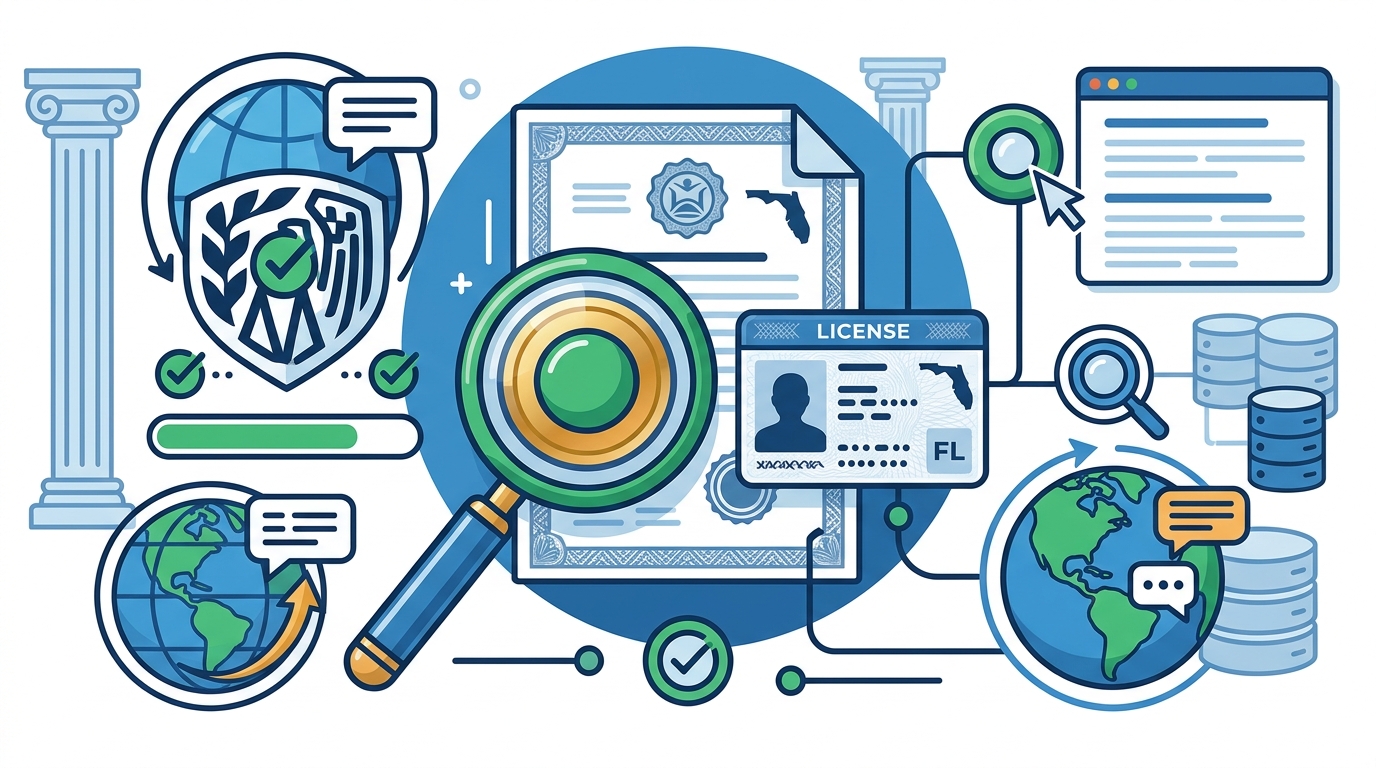
Follow these steps to verify a Spanish-speaking tax preparer's credentials. First, ask for their PTIN and credential type. Second, search the IRS Directory of Federal Tax Return Preparers to confirm their authorization. Third, if they claim to be a CPA, verify their license with the Florida Board of Accountancy. Fourth, if they claim to be an EA, verify their status in the IRS EA Directory. Fifth, if they claim to be an attorney, verify their license with the Florida Bar. Finally, conduct a consultation to assess their language proficiency and communication style.
Keep a record of your verification steps. Save screenshots of the registry results and note the date of your search. This documentation can be useful if you encounter issues later. If a preparer's credentials are not found in the official registries, do not hire them. Report any suspected fraud to the IRS Office of Professional Responsibility. Protecting your financial information is a priority. By verifying credentials, you reduce the risk of errors, fraud, and unauthorized representation.
Key Takeaways
- Use the IRS Directory of Federal Tax Return Preparers to verify federal authorization and PTIN status.
- Check the Florida Board of Accountancy for CPA license status and good standing.
- Verify Enrolled Agent credentials through the IRS EA Directory, as they are federally licensed.
- Confirm attorney licenses through the Florida Bar if the preparer claims to be a lawyer.
- Assess Spanish language proficiency during a consultation by asking for explanations in Spanish.
- Avoid preparers who guarantee outcomes or refuse to provide their PTIN.
- Quality Taxes and Multiservices offers bilingual support and transparent credential verification in Plantation, Florida.
Frequently Asked Questions
How do I check if a tax preparer is authorized by the IRS?
You can check the IRS Directory of Federal Tax Return Preparers. Search by the preparer's name, location, or PTIN. The directory shows their credential type and expiration date.
Does Florida license tax preparers?
Florida licenses CPAs through the Florida Board of Accountancy. Other preparers, such as EAs and attorneys, are licensed federally or by the state bar. Basic tax preparers are authorized by the IRS, not the state.
What is a PTIN?
A PTIN is a Preparer Tax Identification Number. It is a unique identifier assigned by the IRS to all paid tax return preparers. You can use it to verify a preparer's authorization.
Can I verify a preparer's Spanish language skills?
Language skills are not licensed. You can assess them during a consultation by asking the preparer to explain tax concepts in Spanish. Listen for clarity and accuracy.
What should I do if a preparer's credentials are not found?
Do not hire the preparer. Report the issue to the IRS Office of Professional Responsibility. Seek a verified preparer with legitimate credentials.
Where can I find a bilingual tax preparer in Florida?
You can search for bilingual preparers in your area. Quality Taxes and Multiservices in Plantation, Florida, offers bilingual support in English and Spanish. Verify their credentials through official registries.