

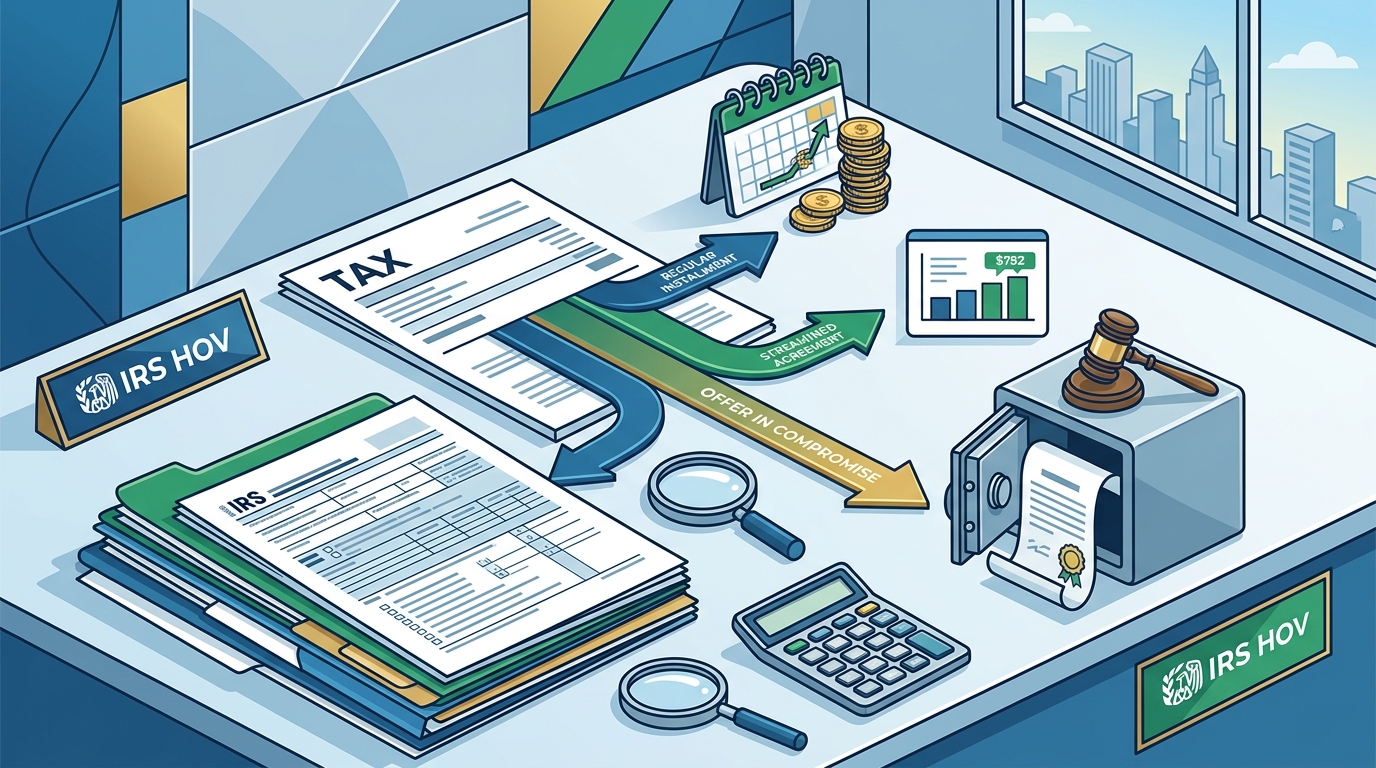
If you owe back taxes to the IRS, you have several payment plan options, including the streamlined installment agreement, the regular installment agreement, and the offer in compromise. These programs allow you to pay your balance in monthly installments or settle for less than the full amount, depending on your financial situation and eligibility. Quality Taxes and Multiservices in Plantation, Florida, helps clients navigate these federal options to resolve tax debt effectively.
Understanding IRS Payment Plans
An installment agreement is a formal arrangement that allows taxpayers to pay their federal tax debt in monthly installments over a set period. This option is distinct from simply paying a balance due, as it provides a structured timeline and can stop certain penalties from accruing. The IRS offers different types of agreements based on the amount owed and the taxpayer's financial profile.
Eligibility and Basic Requirements
To qualify for most payment plans, you must be current with all required tax filings. This means you cannot have unfiled returns for any open tax year. Additionally, you must be able to pay the full balance within the maximum collection period, which is generally seven years. If you are not current with your filings, the IRS will typically require you to file those returns before approving a payment plan.
Streamlined Installment Agreements
Key Features and Benefits
Under the streamlined agreement, the IRS generally does not place a federal tax lien on your property. This is a significant benefit because it protects your credit score and asset ownership. The payment period is typically up to 72 months, or six years. You can apply for this plan online through the IRS website, which often results in immediate approval if you meet the criteria. For clients in South Florida, this digital process is a convenient way to start resolving debt without extensive paperwork.
Regular Installment Agreements
Financial Disclosure and Lien Considerations
Because the IRS conducts a deeper financial analysis, a regular installment agreement may result in the filing of a federal tax lien. A tax lien is a legal claim against your property to secure payment of a tax debt. While this can affect your credit, it is a standard part of the process for larger debts. The payment period for a regular agreement is also up to 72 months, but the monthly payment is calculated to ensure the debt is paid off within the statutory collection period.
Offer in Compromise
An offer in compromise (OIC) is a different type of resolution where you propose to pay a lump sum or a series of payments that is less than the full amount you owe. This option is based on the concept of reasonable collection potential, which considers your income, expenses, and assets. It is not a payment plan in the traditional sense but a settlement of the debt.
When to Consider an OIC
Choosing the Right Option for Your Situation
Selecting the correct payment plan depends on your total debt, your financial stability, and your long-term goals. A streamlined agreement is ideal for smaller debts where you want to avoid liens. A regular agreement is necessary for larger debts where a detailed financial review is required. An offer in compromise is best for those with limited ability to pay who seek a partial settlement.
Impact on Credit and Future Filings
Entering into a payment plan can have various effects on your financial profile. While the IRS may report your payment plan to credit bureaus, making consistent payments can help rebuild your credit over time. It is crucial to stay current with your tax filings while in a payment plan. Missing a payment or failing to file can result in the termination of the agreement and the resumption of collection actions.
Key Takeaways
- Regular installment agreements require a detailed financial disclosure and may result in a tax lien for larger debts.
- An offer in compromise allows you to settle your tax debt for less than the full amount based on your ability to pay.
- You must be current with all required tax filings to qualify for most IRS payment plans.
- The maximum payment period for most installment agreements is 72 months.
- Consistent payments and current filings are essential to maintain your payment plan and protect your credit.
Frequently Asked Questions
What is the maximum amount for a streamlined installment agreement?
Will the IRS file a lien if I enter a payment plan?
For streamlined installment agreements, the IRS generally does not file a lien. For regular installment agreements, a lien may be filed depending on your financial situation and the amount owed.
How long does it take to get approved for a payment plan?
Streamlined agreements applied for online can be approved immediately. Regular agreements and offers in compromise may take several weeks to several months for review and approval.
Can I get a payment plan if I have not filed my taxes?
No, you must be current with all required tax filings to qualify for a payment plan. You must file any missing returns before applying.
What happens if I miss a payment on my installment agreement?
If you miss a payment, the IRS may terminate your agreement. You will typically have a short period to cure the default, but repeated misses can lead to the resumption of collection actions.
Does a payment plan stop interest from accruing?
No, interest continues to accrue on the unpaid balance until the debt is fully paid. However, certain penalties may be reduced or abated while you are in an active payment plan.
Conclusion
Resolving back taxes with the IRS requires choosing the right payment plan for your financial situation. Whether you qualify for a streamlined agreement, a regular agreement, or an offer in compromise, understanding the options is the first step toward financial relief. Quality Taxes and Multiservices provides expert guidance to help you navigate these federal programs. To discuss your specific tax debt and explore your options, in Plantation, Florida.