
Understanding the financial intersection of healthcare and taxation is critical for millions of Americans. According to the Kaiser Family Foundation, over 37 million people received premium tax credits in 2023 to help pay for marketplace coverage. These subsidies lower your monthly premiums, but they also create a complex reconciliation process when you file your annual tax return. If you received advance payments of the premium tax credit, you must report them on your tax return to determine if you owe money or are entitled to a refund. This guide explains how these subsidies affect your tax liability and what steps you need to take to avoid unexpected bills. (Tax Preparation amp IRS)
Understanding the Premium Tax Credit
The Premium Tax Credit (PTC) is a refundable tax credit designed to help eligible individuals and families afford health insurance purchased through the Health Insurance Marketplace. Premium tax credit is a financial assistance program that reduces the cost of monthly health insurance premiums for qualifying taxpayers. The amount of credit you receive is based on your household income and family size relative to the Federal Poverty Level (FPL). (Tax Preparation amp IRS)
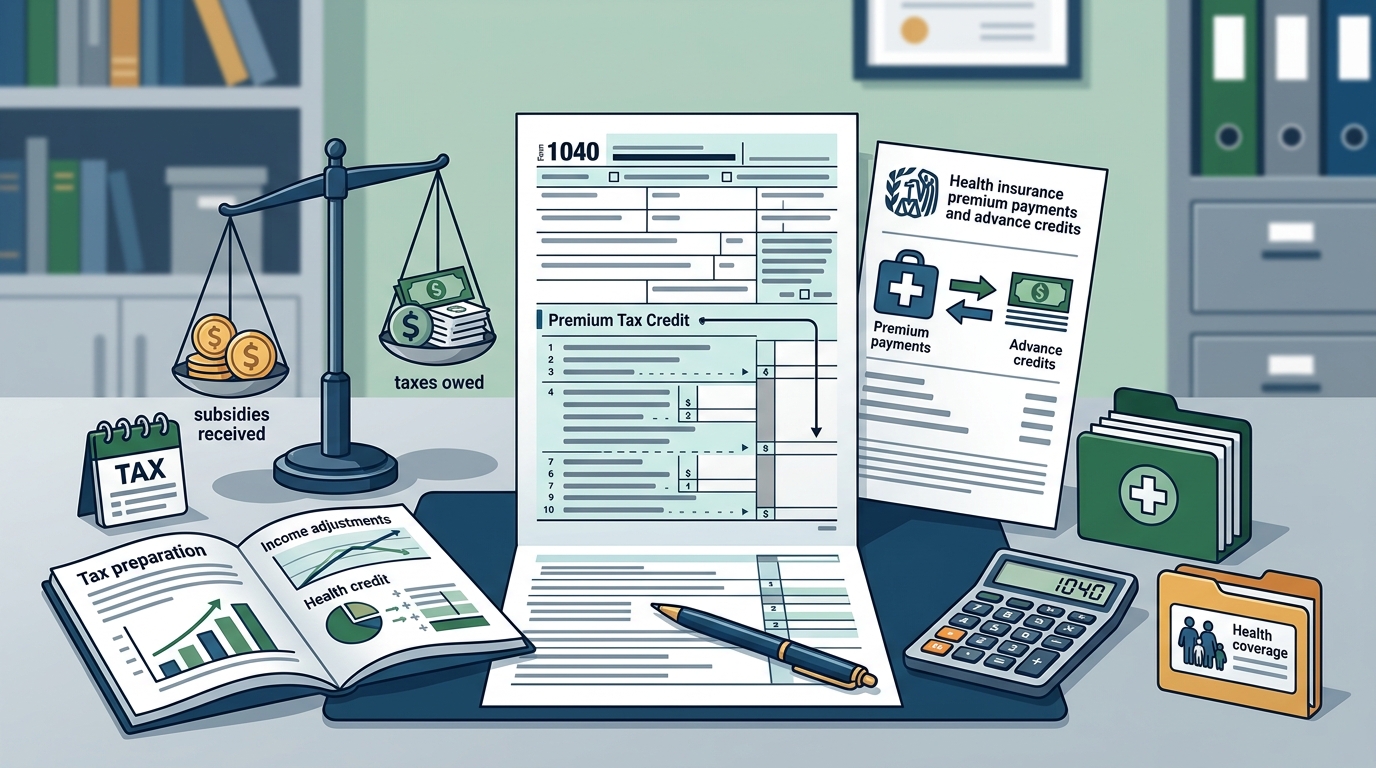
You can choose to have these credits paid in advance directly to your insurance company. This lowers your monthly out-of-pocket costs. However, these advance payments are just an estimate. The actual amount of credit you are entitled to is calculated based on your final annual income. This discrepancy is what leads to either a tax refund or a balance due when you file your return. (Blog Quality Taxes and)
For more details on how marketplace plans work, you can review our guide on affordable health insurance in Florida. Understanding the initial plan selection is the first step in managing your long-term tax implications.
The Role of Form 8962
If you or any family member received advance premium tax credits, you must file Form 8962 with your federal tax return. This form is specifically designed to reconcile the advance payments with the actual credit you qualify for based on your final income.
Form 8962 requires you to input several key data points:
- Your household income for the year.
- The number of people in your tax household.
- The second lowest cost silver plan (SLCSP) premium in your area.
- The total advance premium tax credits paid on your behalf.
This calculation determines your actual premium tax credit. If the advance payments were higher than your actual credit, you must repay the difference. If the advance payments were lower, you receive the additional amount as a refundable credit. This process is detailed in IRS Publication 974, which provides comprehensive instructions for taxpayers.
The Reconciliation Process Explained
The reconciliation process is the mechanism by which the IRS ensures that taxpayers receive the correct amount of financial assistance. Reconciliation is the annual tax procedure where advance subsidy payments are compared against the final calculated eligibility. This process prevents individuals from receiving more or less assistance than they are legally entitled to based on their actual financial situation.
During reconciliation, the IRS looks at your Modified Adjusted Gross Income (MAGI). If your income increased significantly during the year, your eligibility for subsidies may decrease. Conversely, if your income dropped, you might be eligible for a larger credit than what was advanced to your insurer.
For individuals facing complex tax situations, such as those involving back taxes resolution, the interaction between health subsidies and other tax liabilities can be particularly intricate. Professional guidance ensures that all forms are filed correctly to maximize your refund or minimize your debt.
Common Scenarios: Owing vs. Refunding
Whether you owe money or get a refund depends on the accuracy of the income estimates provided to the Marketplace when you enrolled. Here are the most common scenarios:
Scenario 1: You Owe Money
You may owe money if your actual income was higher than what you estimated during enrollment. The Marketplace may have advanced you more credits than you qualified for. The repayment amount depends on your income level. For example, if your income is between 400% and 400% of the FPL, you may have to repay the full excess. However, for those below 400% of the FPL, repayment caps apply.
Scenario 2: You Get a Refund
You may receive a refund if your actual income was lower than estimated. The Marketplace may have advanced you fewer credits than you qualified for. In this case, the difference is added to your tax refund. This is a common outcome for individuals who experienced a job loss or a reduction in hours during the tax year.
Scenario 3: No Change
If your estimated income closely matched your actual income, your advance payments will align with your final credit. You will neither owe a significant amount nor receive a large additional refund related to the subsidies.
For business owners and entrepreneurs, understanding these personal tax implications is crucial. We also offer business tax return preparation to help you navigate the intersection of personal and business finances.
Avoiding Penalties and Errors
Failing to file Form 8962 when required can result in the loss of your premium tax credit. Additionally, incorrect reporting can trigger audits or delays in your refund. To avoid these issues, ensure that your Form 1095-A, which you receive from the Marketplace, matches your records.
Common errors include:
- Incorrect household income figures.
- Misidentifying the tax household members.
- Failing to report changes in marital status or dependents.
Regularly updating your Marketplace account with accurate income estimates can help minimize the gap between advance payments and final eligibility. For those needing support with IRS verification and notice support, professional assistance can clarify complex notices and ensure compliance.
Key Takeaways
- Premium Tax Credit Definition: The premium tax credit is a refundable tax credit that helps eligible taxpayers pay for health insurance premiums purchased through the Marketplace.
- Form 8962 Requirement: You must file Form 8962 to reconcile advance premium tax credits with your final tax liability.
- Income Impact: Your final tax outcome depends on the difference between your estimated and actual household income.
- Repayment Caps: Taxpayers with incomes below 400% of the Federal Poverty Level are subject to repayment caps if they received excess subsidies.
- 1095-A Form: This form from the Marketplace provides the data needed to complete Form 8962 accurately.
- Professional Help: Complex situations involving back taxes or business filings may require expert tax preparation services.
- Timely Filing: Filing your tax return on time with accurate Form 8962 data prevents penalties and delays.
Frequently Asked Questions
Do I have to pay back my health insurance subsidies?
You may have to pay back some or all of your advance premium tax credits if your actual income was higher than what you estimated. The amount you repay depends on your income level and the excess credit received.
What is Form 8962 used for?
Form 8962 is used to calculate your actual premium tax credit and reconcile it with the advance payments made on your behalf. It determines if you owe money or are entitled to a refund.
How does my household income affect my tax return?
Your household income determines your eligibility for the premium tax credit. Higher incomes may reduce or eliminate your eligibility, while lower incomes may increase it, affecting your final tax liability.
What happens if I don't file Form 8962?
If you are required to file Form 8962 and do not, you may lose your premium tax credit entirely. This could result in a higher tax bill or the denial of the credit.
Can I change my subsidy amount during the year?
Yes, you can update your income estimates with the Marketplace at any time. This can adjust your advance payments and potentially reduce the amount you owe or increase your refund.
What is the second lowest cost silver plan (SLCSP)?
The SLCSP is a benchmark plan used to calculate the premium tax credit. It represents the cost of the second cheapest silver plan available in your area and is a key factor in determining your credit amount.
How do I know if I qualify for the premium tax credit?
You qualify if you have marketplace coverage, your household income is between 100% and 400% of the Federal Poverty Level, and you are not eligible for other minimum essential coverage like employer-sponsored insurance.
Contact Quality Taxes and Multiservices
Navigating the complexities of health insurance subsidies and tax reconciliation can be challenging. At Quality Taxes and Multiservices, we provide expert guidance to ensure your tax return is accurate and optimized. Whether you need help with personal tax filing or citizenship and immigration related financial matters, our team is here to help.
Don't let tax season bring unexpected surprises. Schedule a consultation with our tax experts today to secure your financial future. Visit our contact page to book an appointment or call us at (786) 720-6528.