

How Health Insurance Subsidies Affect Your Tax Return
Understanding the relationship between health insurance subsidies and your annual tax return is critical for financial stability. In 2023, over 27 million Americans received premium tax credits through the Affordable Care Act marketplace, according to the Kaiser Family Foundation. These subsidies help lower monthly premiums, but they also create a complex reconciliation process when you file your taxes. If you receive advance payments of the premium tax credit, you must report them on your tax return to determine if you owe money or are due a refund. This process ensures that the subsidy amount matches your actual annual income.
Understanding Advance Premium Tax Credits
Health insurance subsidies, formally known as Premium Tax Credits (PTC), are designed to make marketplace coverage affordable for individuals and families with moderate incomes. The Premium Tax Credit is a refundable tax credit that helps pay for health insurance premiums purchased through the Health Insurance Marketplace. You can choose to receive these credits in advance to lower your monthly bill, or you can wait until you file your tax return to claim the entire amount.
When you apply for coverage, the Marketplace estimates your annual income based on the information you provide. This estimate determines how much of your subsidy is paid directly to your insurance company each month. If your actual income for the year differs significantly from this estimate, the subsidy amount you received may not match what you are actually eligible for. This discrepancy is the core reason why subsidies impact your tax return.
For more details on how to compare marketplace options and understand your coverage, visit our guide on Affordable Health Insurance in Florida. We help clients navigate the complex landscape of providers like Oscar, Ambetter, and Florida Blue to find the best fit for their financial situation.
The Reconciliation Process: Form 8962
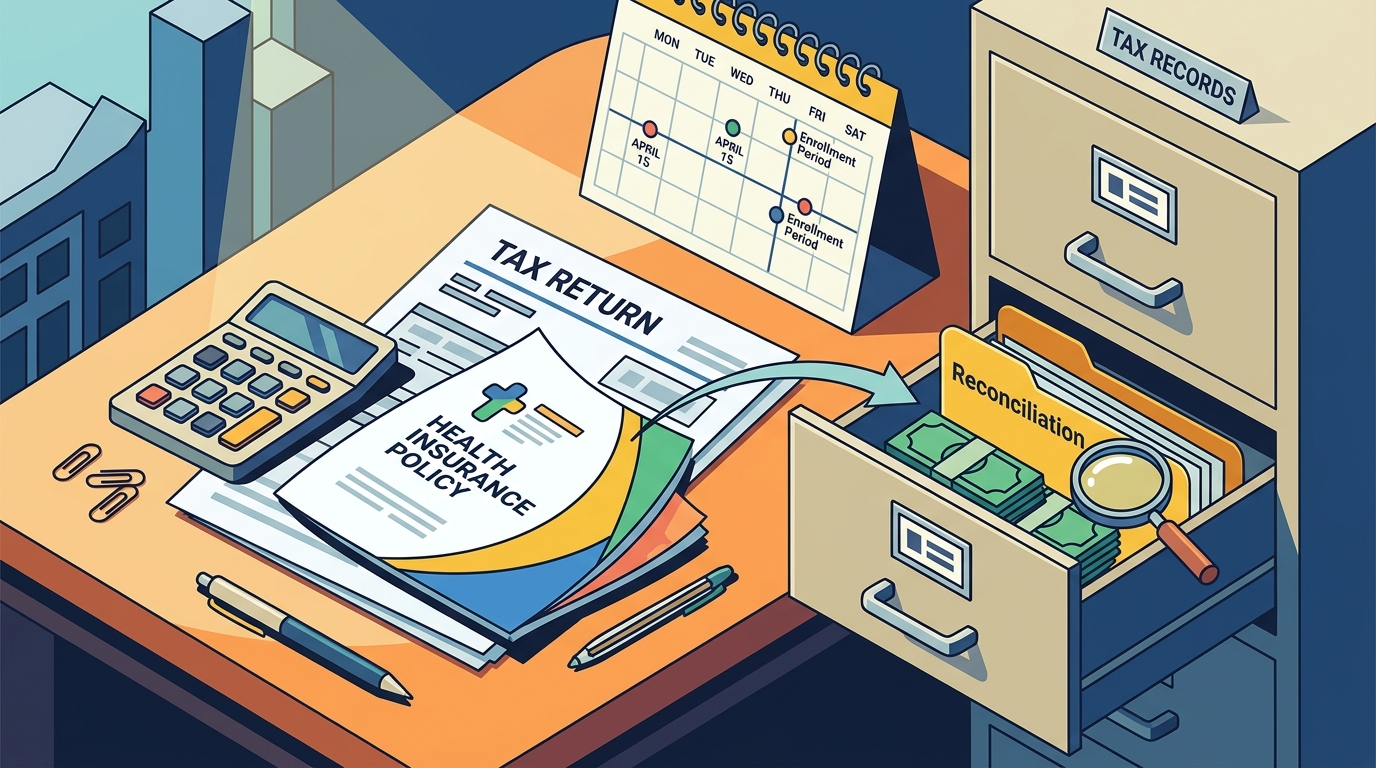
At the end of the tax year, you must reconcile your advance premium tax credits with the actual premium tax credit you are eligible for. This is done using Form 8962, Premium Tax Credit (PTC). The form compares the advance payments made on your behalf against the amount calculated based on your final Adjusted Gross Income (AGI) and household size.
If the advance payments you received were less than or equal to the credit you are eligible for, the difference is added to your tax refund. You essentially get back the money that was held back from your monthly subsidy. Conversely, if you received more in advance payments than you qualify for based on your final income, you must repay the excess amount. This repayment is added to your total tax liability, potentially increasing the amount you owe.
Accurate reporting is essential. Errors on Form 8962 can lead to delays in processing your return or trigger an audit. Our team at Quality Taxes and Multiservices specializes in ensuring that your tax filings accurately reflect your insurance subsidies and income changes.
Repayment Cap Rules and Income Limits
One of the most stressful aspects of health insurance subsidies is the potential need to repay excess credits. However, the law includes repayment caps that limit how much you have to pay back if your income was lower than expected. These caps are based on your filing status and your household income as a percentage of the Federal Poverty Level (FPL).
For example, if your household income is between 200% and 400% of the FPL, your repayment is capped at a specific amount. If your income exceeds 400% of the FPL, the cap increases significantly. According to IRS guidelines, individuals with incomes above 400% of the FPL may still be eligible for subsidies in certain years due to temporary provisions, but the repayment rules become stricter. It is vital to understand these thresholds to avoid unexpected tax bills.
We also provide Back Taxes Resolution Services for clients who have faced unexpected liabilities due to income fluctuations or incorrect subsidy estimates. Early intervention can often reduce the financial burden.
Common Mistakes That Trigger Audits
Many taxpayers make critical errors when dealing with health insurance subsidies. One common mistake is failing to report changes in marital status or household size. If you get married, have a child, or divorce during the year, your subsidy eligibility changes. Not updating this information with the Marketplace can lead to overpayments that you must repay.
Another frequent error is underreporting income. If your actual income is higher than what you estimated during open enrollment, your subsidy decreases. The difference must be repaid. Conversely, if you overestimate your income, you may receive a larger refund, but you must report the correct figures to avoid penalties. Income verification is the most critical step in the reconciliation process.
For business owners, the rules can be even more complex. If you offer health insurance to employees, you may be eligible for the Business Registration Services and related tax credits. Understanding the intersection of personal and business taxes is key to maximizing your benefits.
When to Consult a Tax Professional
While many individuals can file their taxes using standard software, those with complex subsidy situations often benefit from professional help. If you experienced significant life changes, such as a job loss, marriage, or the birth of a child, your subsidy calculations may be intricate. A tax professional can help you navigate Form 8962 and ensure you are not overpaying or underpaying.
Additionally, if you have received IRS Verification & Notice Support regarding your subsidies, it is crucial to address these notices promptly. Ignoring IRS correspondence can lead to penalties and interest charges. Our experts can help you interpret these notices and develop a strategy to resolve any discrepancies.
We serve clients across multiple states, including Florida, New Jersey, and Texas. No matter where you live, understanding your tax obligations related to health insurance is essential for financial health.
Key Takeaways
- Advance Payments Must Be Reconciled: You must report advance premium tax credits on Form 8962 to determine if you owe money or get a refund.
- Income Changes Matter: If your actual income differs from your estimate, your subsidy eligibility changes, potentially triggering a repayment.
- Repayment Caps Exist: The amount you must repay is capped based on your income level and filing status, protecting low-income earners.
- Life Events Impact Subsidies: Marriage, divorce, or having a child can change your eligibility, requiring updates to your Marketplace account.
- Professional Help is Valuable: Complex situations, such as business ownership or IRS notices, often require expert tax preparation.
- Timely Updates Prevent Overpayments: Reporting income changes throughout the year can prevent large tax bills at filing time.
- Form 8962 is Mandatory: You cannot claim the premium tax credit without filing this specific form with your tax return.
Frequently Asked Questions
Do I have to pay back health insurance subsidies?
You may have to repay excess subsidies if your actual income for the year was higher than what you estimated when you enrolled. However, repayment is capped based on your income level and filing status.
What is Form 8962 and why do I need it?
Form 8962 is used to reconcile the advance premium tax credits you received with the actual credit you are eligible for based on your annual income. It is required for anyone who received advance payments.
How do I know if I overestimated my income?
If your actual income is lower than your estimate, you may be eligible for a larger subsidy. The difference between what you received and what you qualify for will be added to your tax refund.
Can I change my subsidy estimate during the year?
Yes, you can update your income and household size information through your Marketplace account. This can adjust your monthly premium payments and prevent a large tax bill at the end of the year.
What happens if I don't report my advance premium tax credits?
Failing to report advance premium tax credits can result in the loss of your entire credit, meaning you may owe thousands of dollars in additional taxes and penalties.
Do self-employed individuals get health insurance subsidies?
Self-employed individuals can purchase coverage through the Marketplace and may be eligible for subsidies if their income falls within the qualifying range. They may also be eligible for the self-employed health insurance deduction.
How does marriage affect my health insurance subsidies?
Marriage changes your filing status and potentially your household income. You must report this change to the Marketplace, as it may increase or decrease your subsidy eligibility.
Schedule Your Consultation
Don't let health insurance subsidies complicate your tax season. Whether you need help with Personal Tax Filing or Business Tax Return preparation, our team is here to help. We provide accurate, reliable guidance to ensure you maximize your refunds and minimize your liabilities. Contact us today to Schedule a Consultation and take control of your financial future.