
How Health Insurance Subsidies Affect Your Tax Return: A Complete Guide
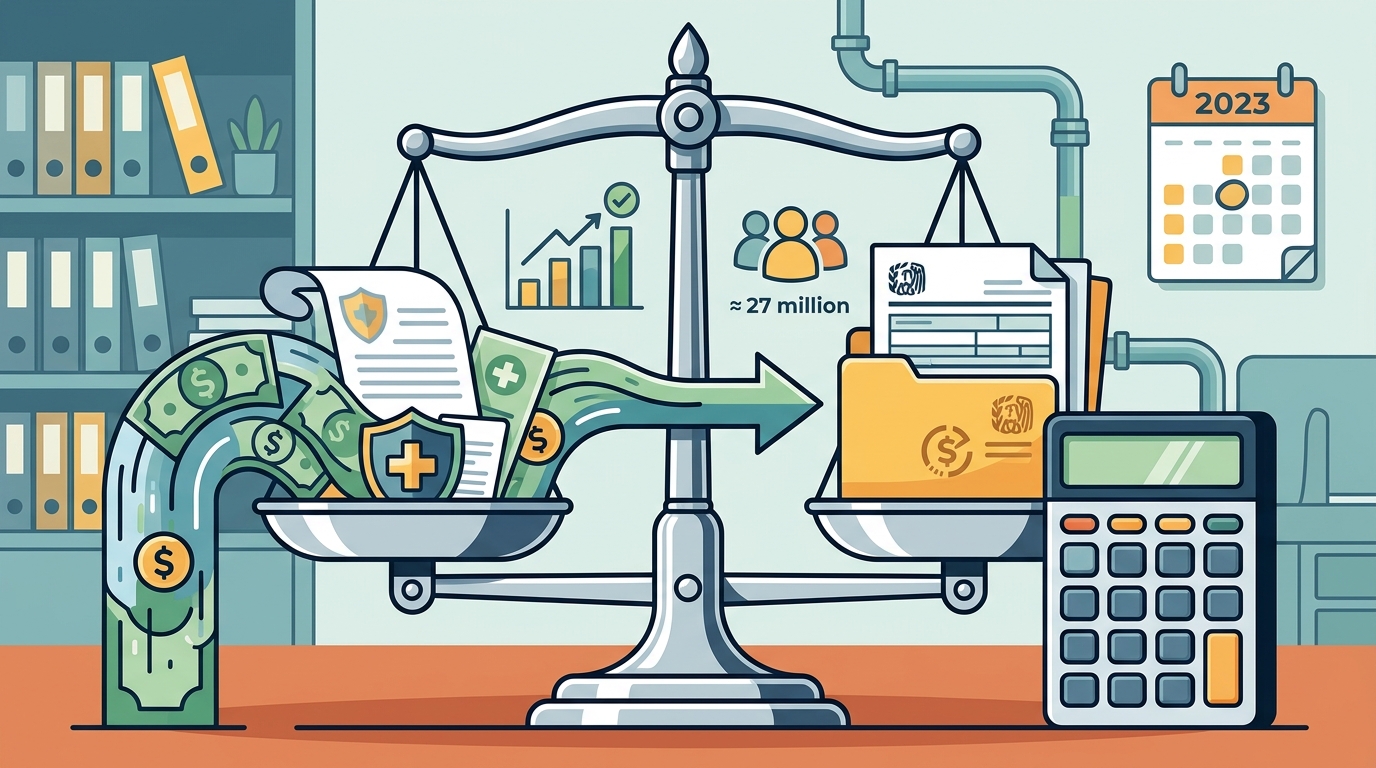
Understanding the relationship between health insurance subsidies and your annual tax filing is critical for avoiding unexpected bills or missed refunds. In 2023, approximately 27 million Americans received advance payments of the Premium Tax Credit (PTC) to help pay for their marketplace coverage. These subsidies are not free money; they are an advance estimate of a tax credit you are eligible for based on your income. If your actual income differs significantly from your estimate, the IRS requires you to reconcile these amounts on your Form 8962. This process ensures that the government gives you the correct amount of financial assistance, whether that means you owe additional taxes or receive a larger refund.
Understanding the Premium Tax Credit
The Premium Tax Credit is a refundable tax credit designed to help eligible individuals and families afford health insurance purchased through the Health Insurance Marketplace. Premium Tax Credit is a financial assistance program that lowers your monthly health insurance premiums. To qualify, you generally must have a household income between 100% and 400% of the Federal Poverty Level (FPL). However, recent legislative changes have temporarily removed the 400% cap for the 2021 and 2022 tax years, and similar provisions have been extended in various forms to prevent coverage cliffs for higher-income earners.
When you apply for coverage through the Marketplace, you can choose to have the subsidy paid directly to your insurance company each month. This is known as the Advance Premium Tax Credit (APTC). While this makes monthly payments more manageable, it creates a reconciliation requirement at tax time. You must report the total amount of APTC received on your tax return to determine if you are entitled to the full credit or if you received too much.
For more details on how the Marketplace works, you can review affordable health insurance options in Florida. Our team at Quality Taxes and Multiservices helps clients navigate these complexities to ensure accurate reporting.
The Reconciliation Process Explained
Reconciliation is the process of comparing the advance payments you received with the actual credit you qualify for based on your final annual income. This is done using Form 8962 is the IRS form used to calculate the Premium Tax Credit. The form requires you to input your household income, family size, and the total advance credit payments received.
If your actual income is lower than what you estimated when you enrolled in your plan, you may be eligible for a larger credit than you received in advance. In this case, the difference is added to your tax refund. Conversely, if your income is higher than estimated, you may have received too much credit. The excess amount must be repaid to the IRS, which increases your tax liability.
This process is not optional. Failure to file Form 8962 when required can result in penalties and the inability to claim the credit at all. It is essential to keep all records of your monthly premium payments and subsidy amounts provided by your insurer.
Repayment Rules and Income Limits
One of the most stressful aspects of health insurance subsidies is the potential repayment obligation. The amount you must repay depends on your household income relative to the Federal Poverty Level. The IRS uses a tiered repayment structure to limit the financial burden on lower-income taxpayers.
For tax years prior to 2021, taxpayers with incomes below 400% of the FPL were subject to strict repayment caps. For example, if your income was between 200% and 300% of the FPL, the maximum repayment was capped at a specific dollar amount. However, the American Rescue Plan Act and subsequent legislation have modified these caps for recent years, often eliminating the repayment cap entirely for those with incomes up to 400% of the FPL.
It is crucial to understand that repayment caps are determined by your household income level. If your income exceeds 400% of the FPL, you may be required to repay the entire excess amount received. This can result in a significant tax bill. For individuals in this situation, consulting with a tax professional is highly recommended to explore all available deductions and credits.
For more information on managing back taxes or resolving IRS notices, visit our back taxes resolution services page.
Common Mistakes to Avoid
Many taxpayers make critical errors when reconciling their health insurance subsidies. One common mistake is failing to report all income sources. If you had multiple jobs or received freelance income, your total household income may have changed significantly from your initial estimate.
Another frequent error is ignoring changes in family size. If you had a child, got married, or divorced during the year, your eligibility for the subsidy may have changed. Failing to update your Marketplace information can lead to incorrect advance payments and subsequent reconciliation issues.
Additionally, some taxpayers assume that if they did not receive a subsidy, they do not need to file Form 8962. This is incorrect. If you received any advance premium tax credit, you must file this form regardless of your final income outcome. For guidance on personal tax filing, check out our personal tax filing services.
Subsidy Scenarios and Outcomes
To illustrate how subsidies affect your taxes, consider the following scenarios. These examples highlight the importance of accurate income estimation.
| Scenario | Estimated Income | Actual Income | Outcome |
|---|---|---|---|
| Under-Estimated Income | $50,000 | $45,000 | Receive additional refund |
| Over-Estimated Income | $50,000 | $65,000 | Owe additional taxes |
| Accurate Estimate | $50,000 | $50,000 | No additional payment or refund |
| Significant Increase | $40,000 | $90,000 | High repayment liability |
In the first scenario, the taxpayer earned less than expected, qualifying for a larger credit. The IRS refunds the difference. In the second scenario, the income increase pushed the taxpayer into a higher bracket, reducing their eligibility. The excess advance payments must be repaid. The third scenario represents the ideal outcome where estimates match reality. The fourth scenario demonstrates the risk of significant income growth without updating Marketplace information.
Key Takeaways
- Premium Tax Credit is a refundable tax credit that reduces monthly health insurance premiums for eligible individuals.
- Form 8962 is required to reconcile advance payments with your actual annual income.
- Repayment amounts depend on your household income relative to the Federal Poverty Level.
- Changes in family size or income must be reported to the Marketplace to avoid reconciliation errors.
- Failure to file Form 8962 can result in penalties and loss of the credit.
- Accurate income estimation at enrollment minimizes unexpected tax bills or refunds.
- Quality Taxes and Multiservices offers expert guidance for tax preparation and IRS relief.
Frequently Asked Questions
Do I have to pay back health insurance subsidies?
You may have to pay back subsidies if your actual income is higher than what you estimated when you enrolled. The amount you repay depends on your income level and the repayment caps in effect for that tax year.
What is Form 8962 used for?
Form 8962 is used to calculate the Premium Tax Credit and reconcile any advance payments received. It ensures you receive the correct amount of credit based on your final annual income.
Can I receive a subsidy if I have employer insurance?
Generally, no. You are not eligible for Premium Tax Credits if you are offered affordable health insurance through an employer that meets minimum value standards.
How do I know if I received advance premium tax credits?
Your insurance provider will send you Form 1095-A, which details the amount of advance premium tax credits paid on your behalf. You will need this form to complete Form 8962.
What happens if I don't report my income accurately?
Incorrect reporting can lead to penalties, delayed refunds, or unexpected tax bills. It is crucial to update your Marketplace information whenever your income or family size changes.
Are there income limits for receiving subsidies?
Yes, typically you must have an income between 100% and 400% of the Federal Poverty Level. However, temporary legislation has extended eligibility to higher income levels in recent years.
Can I change my subsidy amount during the year?
Yes, you can update your income estimate at any time through your Marketplace account. This will adjust your monthly premium payments and reduce the risk of reconciliation issues at tax time.
Schedule Your Tax Consultation
Navigating the complexities of health insurance subsidies and tax reconciliation can be daunting. At Quality Taxes and Multiservices, we provide expert guidance to ensure your tax return is accurate and optimized. Whether you need help with personal tax filing or resolving IRS notices, our team is here to help. Contact us today to schedule a consultation and secure your financial future.