

Reporting health insurance income incorrectly on your tax return can trigger immediate alerts from the IRS and result in unexpected tax liabilities. According to recent IRS data, millions of taxpayers receive Form 1095-A annually, and discrepancies between these forms and tax filings are a leading cause of refund delays. If you have received premium tax credits through the Health Insurance Marketplace, accurate income reporting is not optional. It is a legal requirement that determines your final tax outcome. (Tax Preparation amp IRS)
Understanding Form 1095-A
Form 1095-A is the Health Insurance Marketplace Statement. This document is issued to individuals who purchased health insurance through the federal or state marketplace. It contains critical data points that the IRS uses to verify your eligibility for premium tax credits. (Tax Preparation amp IRS)
The form includes the monthly premium amount, the second lowest cost silver plan benchmark, and the advance payments of the premium tax credit (APTC) sent directly to your insurance provider. If any of these numbers are incorrect, your tax return will not reconcile correctly. Quality Taxes and Multiservices emphasizes that reviewing this form before filing is the first line of defense against financial errors. (Blog Quality Taxes and)
Many taxpayers assume that the numbers on Form 1095-A are final. However, errors in household size, coverage months, or premium amounts are common. These discrepancies can lead to the recapture of tax credits, meaning you may owe money back to the government. IRS guidelines state that taxpayers must use this form to complete Form 8962. (Business Registration Services LLC)
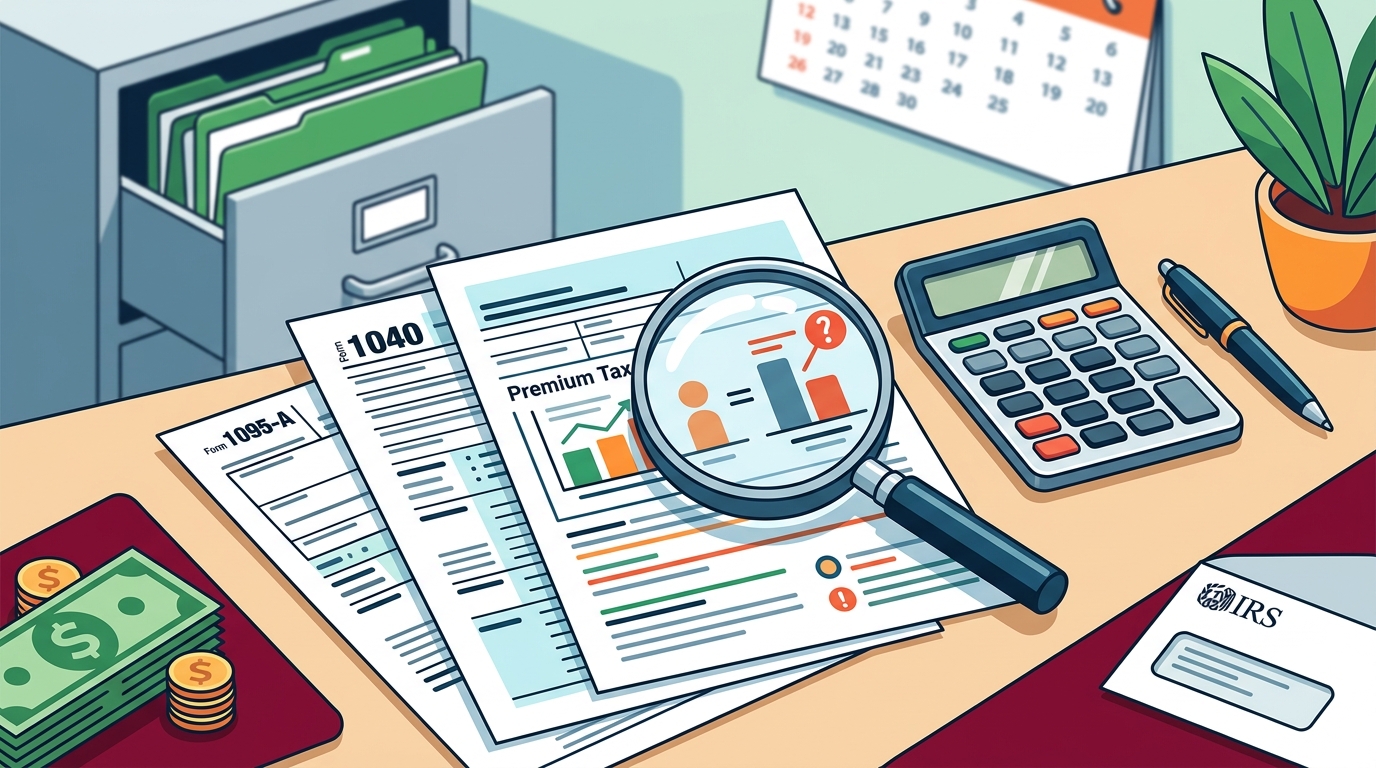
The Reconciliation Process
Reconciliation is the process of comparing the advance premium tax credits you received during the year with the actual premium tax credit you are eligible for based on your final annual income. This calculation is done using IRS Form 8962. (Back Taxes Help Services)
If your income was lower than estimated, you may be entitled to an additional credit. Conversely, if your income was higher, you may have to repay some or all of the advance payments. The IRS uses the data from your Form 1095-A to perform this check automatically. If the data does not match your filed return, the system flags the return for manual review.
This process is complex because it involves multiple variables. The second lowest cost silver plan benchmark varies by county and year. In 2024, changes to subsidy structures further complicated these calculations.