
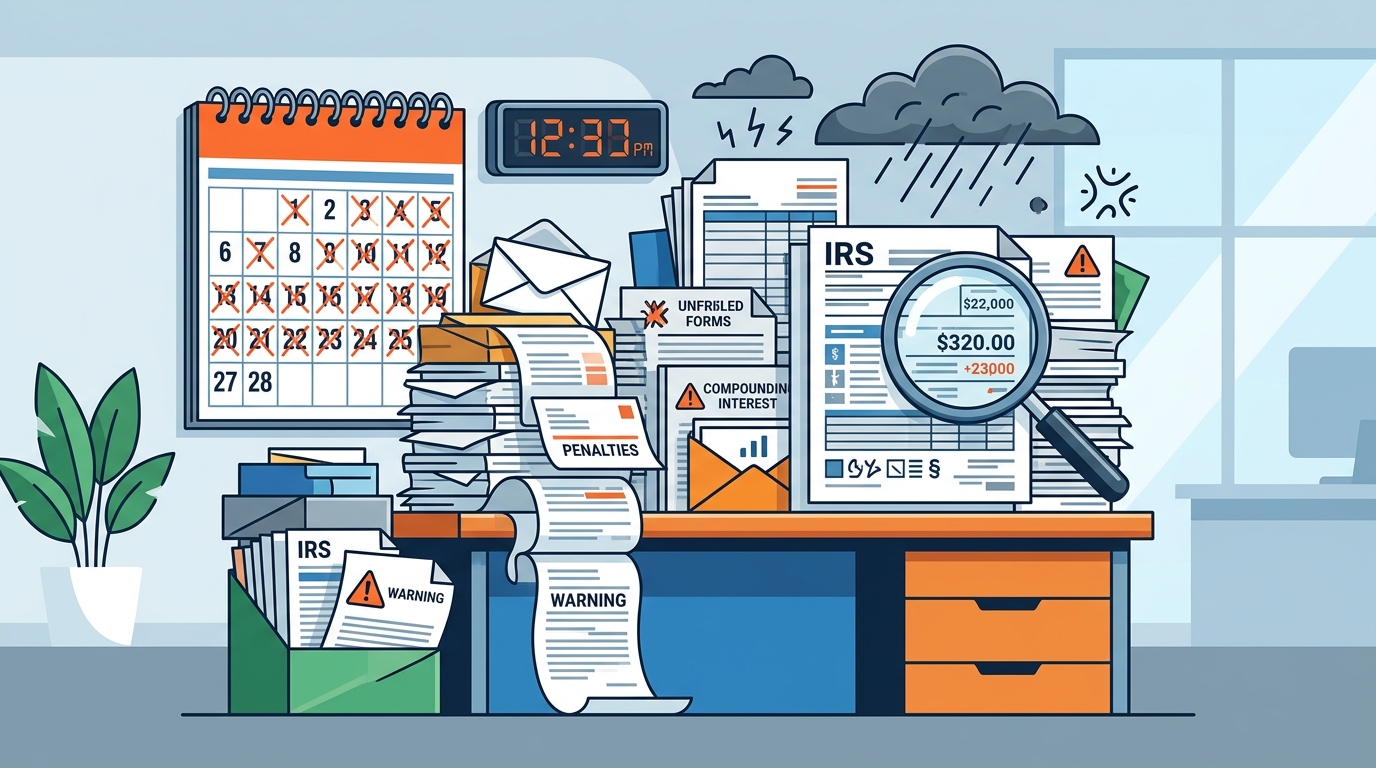
Facing an IRS notice or realizing you have overdue taxes can trigger immediate financial anxiety. According to recent data from the Internal Revenue Service, the agency processes millions of unfiled returns and collects billions in back taxes annually, indicating that unresolved tax issues are a widespread national challenge rather than an isolated incident. Ignoring these notices does not make the debt disappear. Instead, the IRS applies penalties and interest that compound over time, significantly increasing the total amount owed. However, the tax code provides several structured relief programs designed to help taxpayers resolve these debts without facing financial ruin. Understanding these options is the first step toward regaining control of your financial future.
Understanding the IRS Notice
The first step in resolving any tax problem is to understand exactly what the IRS is telling you. The agency sends specific notice codes to indicate the nature of the issue. These notices are not generic letters. They contain precise calculations, deadlines, and instructions for responding. Common notices include CP14 for amounts owed, CP501 for first-time balance due reminders, and CP503 for final notices before levies.
Failure to respond to these notices within the specified timeframe can lead to severe consequences. The IRS may initiate wage garnishments, bank account levies, or liens against your property. According to financial experts, early intervention is critical because the cost of resolving a tax debt increases by approximately 25% if left unaddressed for more than a year. Reading the notice carefully allows you to determine if the IRS has made a mathematical error or if you genuinely owe the amount stated.
Immediate Steps to Take
When you receive a notice regarding overdue taxes, panic is a natural reaction. However, taking immediate, calculated action is far more effective than avoidance. The following steps outline the standard protocol for addressing IRS problems effectively.
Verify Your Identity and the Notice
Before taking any action, confirm that the notice is legitimate. Scammers often impersonate IRS agents to steal personal information. The real IRS will never call you unexpectedly to demand immediate payment via gift cards or wire transfers. You can verify the notice by contacting the IRS directly using the phone number listed on their official website or by logging into your online account at irs.gov.
Review Your Tax Records
Compare the notice against your own tax records. Check your W-2s, 1099s, and previous tax returns. If you filed your return on time but still received a notice, the issue might be a discrepancy in reported income. If you have not filed a return, the IRS may have prepared a "Surrender Return" based on third-party data. In this case, you must file your actual return to correct the record.
Tax Resolution Options
Once you have confirmed the debt, you must choose a resolution path. The IRS offers several programs for taxpayers who cannot pay their full balance immediately. These options are designed to provide flexibility based on your financial situation.
Installment Agreements
An installment agreement allows you to pay your tax debt in monthly payments. This is often the most common solution for individuals and small businesses. If you owe less than $50,000, you may qualify for a streamlined installment agreement with minimal documentation. For larger amounts, you may need to provide a detailed financial statement. The IRS charges a small setup fee and interest on the remaining balance, but this stops penalties from compounding as aggressively.
Offer in Compromise
An Offer in Compromise (OIC) allows you to settle your tax debt for less than the full amount owed. This option is strictly for taxpayers who can prove they are unable to pay the full debt or where paying the full amount would cause economic hardship. The IRS evaluates your income, expenses, and asset equity to determine the offer amount. According to IRS data, only a small percentage of applications are approved, making this a high-stakes option that requires precise financial documentation.
Penalty Abatement
If you have a reasonable cause for failing to file or pay on time, you may request penalty abatement. Common reasons include serious illness, natural disasters, or unavoidable absence. The IRS does not grant penalty abatement for lack of funds alone. You must provide evidence that the failure was due to circumstances beyond your control. Successful abatement can save taxpayers thousands of dollars in additional fees.
Currently Not Collectible Status
If you are experiencing significant financial hardship, you may qualify for Currently Not Collectible (CNC) status. This status temporarily halts all collection activities, including levies and garnishments. While the debt does not disappear, the IRS stops pursuing payment until your financial situation improves. Interest and penalties continue to accrue during this period, but it provides immediate relief from aggressive collection tactics.
Choosing a Tax Professional
While some taxpayers can handle simple notices on their own, complex IRS problems often require professional assistance. Navigating the tax code alone can lead to costly mistakes. A qualified tax professional can negotiate with the IRS on your behalf and ensure you receive the maximum relief available.
Types of Tax Professionals
Not all tax professionals are equal. The three main types of representatives authorized to practice before the IRS are Certified Public Accountants (CPAs), Enrolled Agents (EAs), and Tax Attorneys. Enrolled Agents are specialists in tax resolution and have unlimited rights to represent taxpayers before the IRS. Tax Attorneys are best suited for complex legal disputes or criminal tax issues. CPAs are ideal for ongoing tax planning and compliance.
Red Flags to Avoid
The tax resolution industry is rife with scams. Be wary of firms that guarantee specific outcomes, such as promising to eliminate your entire tax debt. No ethical professional can guarantee an OIC approval. Additionally, avoid firms that ask you to pay the full fee upfront or that encourage you to file fraudulent returns. Always check the credentials of any professional you hire.
Prevention Strategies
Resolving overdue taxes is difficult. Preventing them is significantly easier. Implementing robust tax management strategies can help you avoid future IRS problems. Regularly reviewing your withholding allowances and making estimated tax payments are essential practices for freelancers and business owners.
For businesses, maintaining accurate bookkeeping records is crucial. Disorganized financial records make it difficult to claim legitimate deductions and increase the risk of audit triggers. Utilizing professional business tax return services ensures that your filings are accurate and compliant with current regulations. Furthermore, staying informed about changes in tax law can help you adjust your strategies proactively rather than reactively.
Insurance and Business Registration
Tax issues often intersect with broader business health. Proper business registration services ensure that your entity is compliant with state and federal requirements, reducing the risk of administrative penalties. Additionally, exploring marketplace health insurance options can provide tax advantages for small business owners, such as the self-employed health insurance deduction. Integrating these services creates a comprehensive compliance framework that protects your assets.
Key Takeaways
- Act Immediately: Ignoring IRS notices leads to compounding penalties and potential levies.
- Verify Notices: Always confirm the legitimacy of IRS communications to avoid scams.
- Explore Relief Programs: Options like installment agreements and penalty abatement can reduce your burden.
- Hire Qualified Help: Enrolled Agents and Tax Attorneys have specific authority to negotiate with the IRS.
- Document Everything: Keep detailed records of all correspondence and financial statements.
- Understand Your Rights: The IRS must follow strict procedures before taking collection action.
- Prevent Future Issues: Regular tax planning and professional support minimize future risks.
Frequently Asked Questions
What happens if I ignore an IRS notice?
Ignoring an IRS notice can lead to the assessment of additional penalties and interest. The IRS may eventually issue a levy, which allows them to seize wages, bank accounts, or property to satisfy the debt. Early response is always the best strategy.
Can I negotiate my tax debt with the IRS?
Yes, you can negotiate through programs like an Offer in Compromise or an installment agreement. These negotiations require detailed financial disclosure and proof of inability to pay the full amount.
What is the difference between a CPA and an Enrolled Agent?
CPAs are licensed accountants who can audit, review, and prepare tax returns. Enrolled Agents are federally licensed tax practitioners who specialize exclusively in tax resolution and have unlimited representation rights before the IRS.
How long does the IRS have to collect a tax debt?
The IRS generally has ten years from the date of assessment to collect a tax debt. After this period, the debt is written off. However, filing for bankruptcy or an installment agreement can extend this collection period.
What is penalty abatement?
Penalty abatement is a request to the IRS to remove penalties based on reasonable cause, such as illness or natural disaster. It does not remove the tax itself, only the additional fees.
Can the IRS freeze my bank account?
Yes, the IRS can levy your bank account if you have ignored previous notices and failed to resolve your debt. They must provide a final notice of intent to levy before taking this action.
Do I need a lawyer for back taxes?
You do not always need a lawyer. Enrolled Agents and CPAs can handle most tax resolution cases. However, if criminal charges are involved or the case is highly complex, a tax attorney may be necessary.
Get Expert Help for Your Tax Problems
Overdue taxes and IRS problems do not resolve themselves. The longer you wait, the more the debt grows and the more stressful the process becomes. You do not have to navigate this complex system alone. Quality Taxes offers specialized back taxes resolution services tailored to your unique financial situation. Whether you need help with personal tax filing or complex IRS verification and notice support, our team is ready to assist. Contact us today to schedule a consultation and take the first step toward financial freedom.